
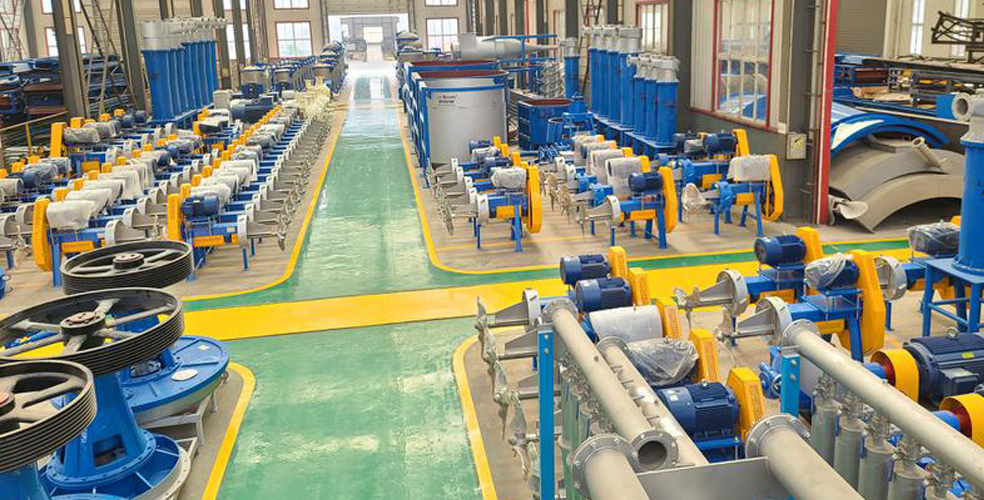
Design Essentials of OCC Pulping System for Tissue Paper Production

OCC fibers are typically short, with a high proportion of fine components and limited long-fiber content, which can compromise the strength of the final tissue product. Additionally, OCC contains various contaminants such as adhesives, waxes, hot melts, and printing inks. These sticky impurities can deposit on equipment, disrupt production, and weaken fiber bonding, ultimately affecting product quality. Any well-designed pulping system must therefore prioritize efficient contaminant removal.
Benefits You Can Expect
1. Lower Production Costs – Using OCC instead of virgin pulp significantly reduces raw material expenses.
2. High Product Quality – Our advanced cleaning and dispersion technologies produce tissue with excellent softness, absorbency, and strength.
3. Full Compliance – Meet all applicable standards for brightness, strength, and microbial safety.
4. Easy Operation – One-touch start/stop automation reduces operator workload and maintenance costs.
5. Eco-Friendly – Divert packaging waste from landfills and reduce deforestation associated with virgin fiber production.
A recent 100,000 t/a project successfully implemented our OCC pulping line with the following process: pulping → coarse screening → three-stage flotation → two-stage heat dispersion → fine screening → bleaching → tissue forming on crescent formers at speeds up to 1,600 m/min. The result: high-quality tissue paper meeting all market standards at competitive production costs.
Let our engineering team design a pulping system tailored to your production goals. Email: leizhanworld@gmail.com